
Preschool Environment
Age: 3 – 6 years
Our preschool environment is a dynamically prepared environment providing each child with the tools to maximize their learning potential. The indoor environment contains a variety of Montessori materials for the refinement of sensory perception and the development of the fundamentals of literacy and mathematical understanding.
Music, art, dance and physical education form part of our core curriculum as our approach to teaching and learning encompasses all facets of the child’s journey.
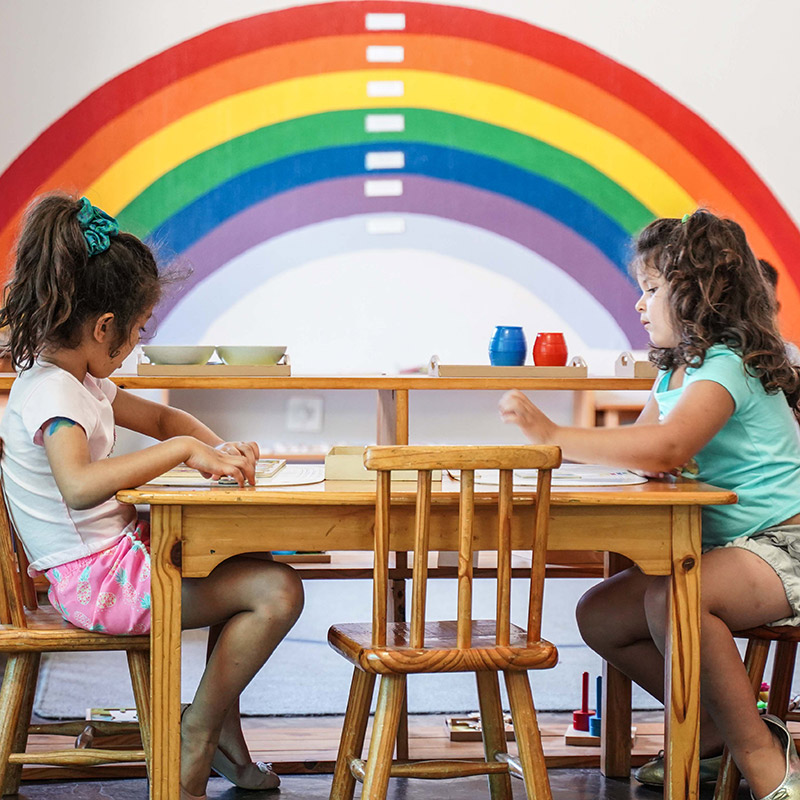
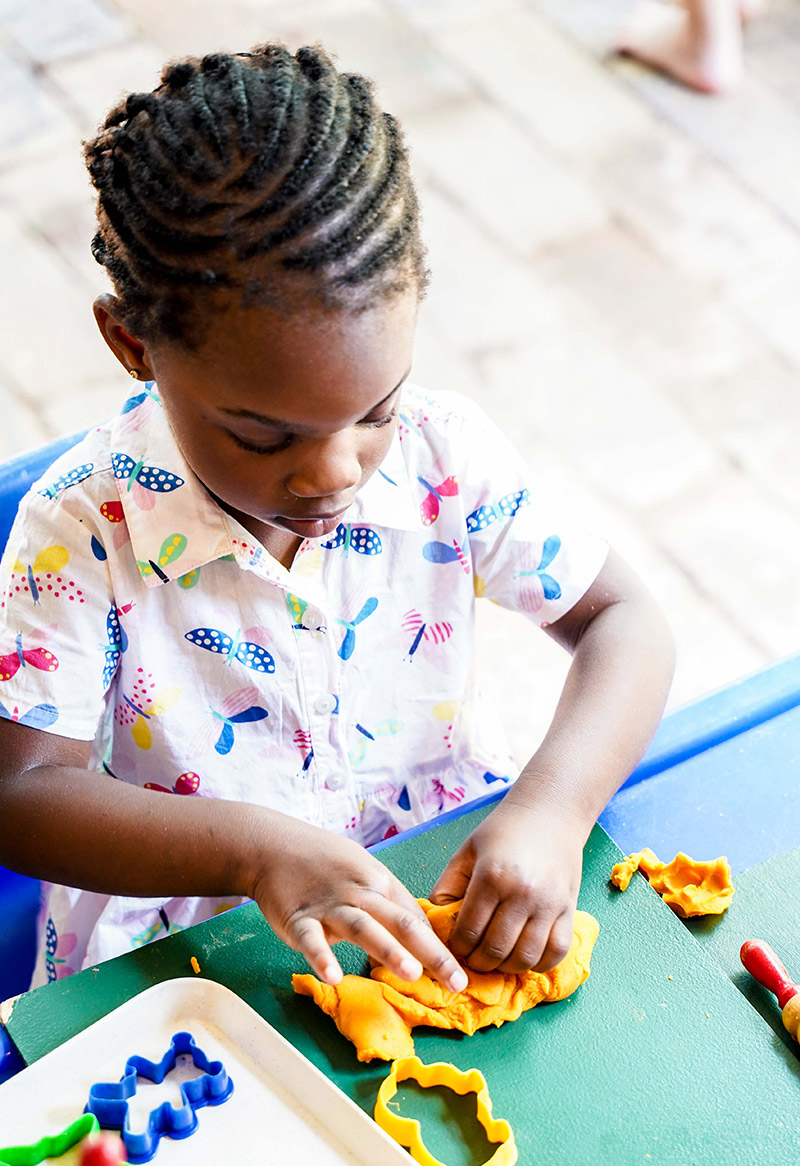
We encourage functional independence, task persistence and self-regulation in our pre-school environment which builds a learning foundation that includes a positive attitude toward tasks and a sense of order and pride in their community and personal environment. We encourage curiosity, habits of concentration, initiative and persistence, the ability to make age appropriate decisions, self-discipline and a sense of responsibility within the school community. We guide social development through respectful, clear communication and safe, natural consequences. The resulting confidence and good communication skills that develop make our students unusually adaptable and willing to explore new settings – all excellent preparation for school readiness and indeed for life.
The 3 – 6 year environment is divided into five core curriculum areas:
- Practical Life: Through a variety of activities, the child learns skills for daily living and helps develop manual dexterity, hand-eye co-ordination, concentration, independence and the ability to initiate his own learning.
- Sensorial Area: This area provides opportunities for the refinement of the five senses through concrete experiences. The child is able to order, classify and describe sensory impressions in relation to length, width, temperature, mass, colour and pitch.
- Language Materials: Each child’s language skills are enriched through vocabulary, conversation and comprehension activities. The phonic approach to reading is used and the children are encouraged to experience the diversity of language in as many ways as possible.
- Mathematics: This area makes use of manipulative, concrete materials to enable the child to internalise concepts of number, symbol, sequence, operations and memorization of basic facts.
- Cultural Subjects: These activities introduce the child to basics in geography, history, science, botany and zoology. Music, art and movement education are part of the integrated curriculum. The aim of the cultural environment is to help the child to become a “true citizen of the world”.
