Montessori Education
The most important years of a child’s cognitive and social growth are the first 6 years of life when unconscious learning is gradually brought to the conscious level.
Authentic Montessori schools promote community skills in a nurturing environment and the opportunity for the child to have freedom of choice in a secure and controlled environment.
The Montessori philosophy also values natural world learning in a cooperative environment. Enquiry-based and small group presentations are part of the Montessori philosophy and everything focuses on a deep respect for child and the environment.
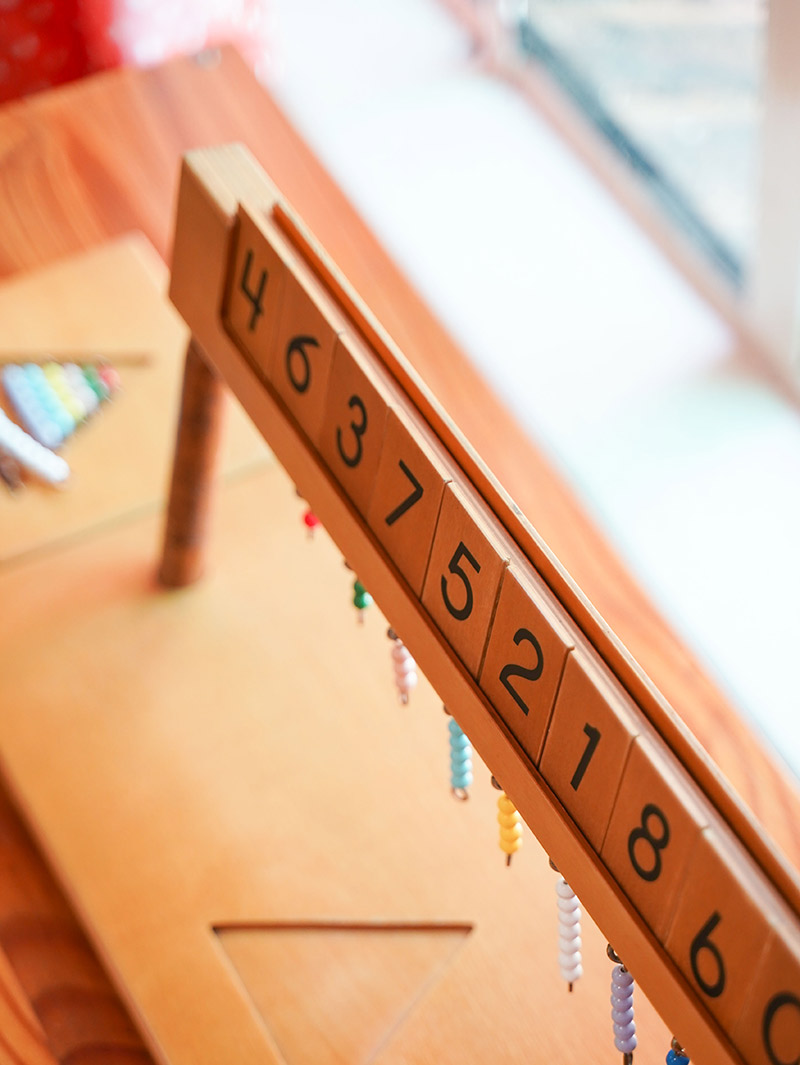
This approach to education fosters independence, confidence and self- sufficiency through repetition and practice of age appropriate activities that are designed with conceptual learning steps in mind, encouraging skills such as problem solving by incorporating, in its design, a control of error for the child to discover independently. This way of learning helps children to be more self-reliant. The basic idea is that children need to be taught where they “are,” not to reach some kind of pre-determined standard, and to trust that a curious mind, nurtured, will remain curious and love learning.
Given the brilliant way that Dr. Maria Montessori used concrete materials to prepare young children to understand abstract concepts in mathematics, science and other academic subjects, it is not surprising that the Montessori approach to education has stood the test of time.
Montessori teachers are Directresses who are trained differently from other preschool teachers who conduct a play based or standardized curriculum based program. A Montessori qualification is a 2 -3 year teaching qualification specialized in Montessori education specifically. Montessori teachers often have other qualifications, too, such as traditional teaching diplomas, degrees etc. Montessori teachers are trained to guide, but not interfere with a child’s development. They learn how to use specially designed materials to both teach and assess the child and to use the materials at multiple levels. Without rewards or punishment, the Montessori Directress has the ability to manage a classroom, observe children, document work, and provide lessons all within an almost magical atmosphere of respect and kindness – quite a contrast to the average curriculum based preschool.
As Maria Montessori said:
“Children are not empty vessels, they are rich in potential and are co-constructors of knowledge.” – Maria Montessori
For more insight into the global Montessori philosophy, click on the video link below provided by Jesse McCarthy:
